

The best and fastest way for this to grow is for you to share the posts within your networks. A forward goes a long way, and the more subscribers we get, the more I’ll be able to write. The writing may change in the next few months to be a bit more entertaining (we hope) so tell your friends!
Canada is a nation of regions, and in our ongoing debate about what it means to be Canadian (or whether we, here in Alberta, should be), the regional identities they spawn quickly overtake discussions about the national. The thing is, regions are determined, often, by geography, not provincial boundaries, even though it is the concept of a provincial identity that often dominates the discourse. For the few who have driven across the country, this observation seems obvious to the point of redundancy; East-Central Alberta and the Prairie regions of Saskatchewan and Manitoba are of one kind, so too is the Peace Country on both sides of the border. And in what world does Sudbury have anything in common with Toronto?
National borders, though, are often much more rigid, even if there is a shared geography. This is partially due to stark political choices—and realities—overtaking geography’s influence. I’m sure the Italians and French living in the Alps had a lot more in common before Napoleon and Garibaldi had their say (never mind the fact that they didn’t think of themselves as “French” or “Italian” before that).
Wallace Stegner’s Wolf Willow is a lot of things that make one think about identity and memory. Part memoir, part historical fiction, it is a bizarrely structured book, something that really doesn’t work all that well. Stegner’s prose is so engaging and driving, though, that it doesn’t matter. It explores, inconclusively, a region that has both geographical unity and stark nationalist differences, while also grappling with the forces that forge an identity and with how even the things you hate from your youth are a part of you. As he concludes: “I may not know who I am, but I know where I am from.”
Stegner was a 20th-century American novelist who was a Pulitzer-winning writer (called “The Dean of Western Writers”) who, coincidentally, spent a short but highly influential period of his youth growing up in Eastend, Saskatchewan. His time there was short, but impactful. He changed the town’s name in the book to hide some of the criticism he levels at it throughout, especially when writing about it following a return decades later.
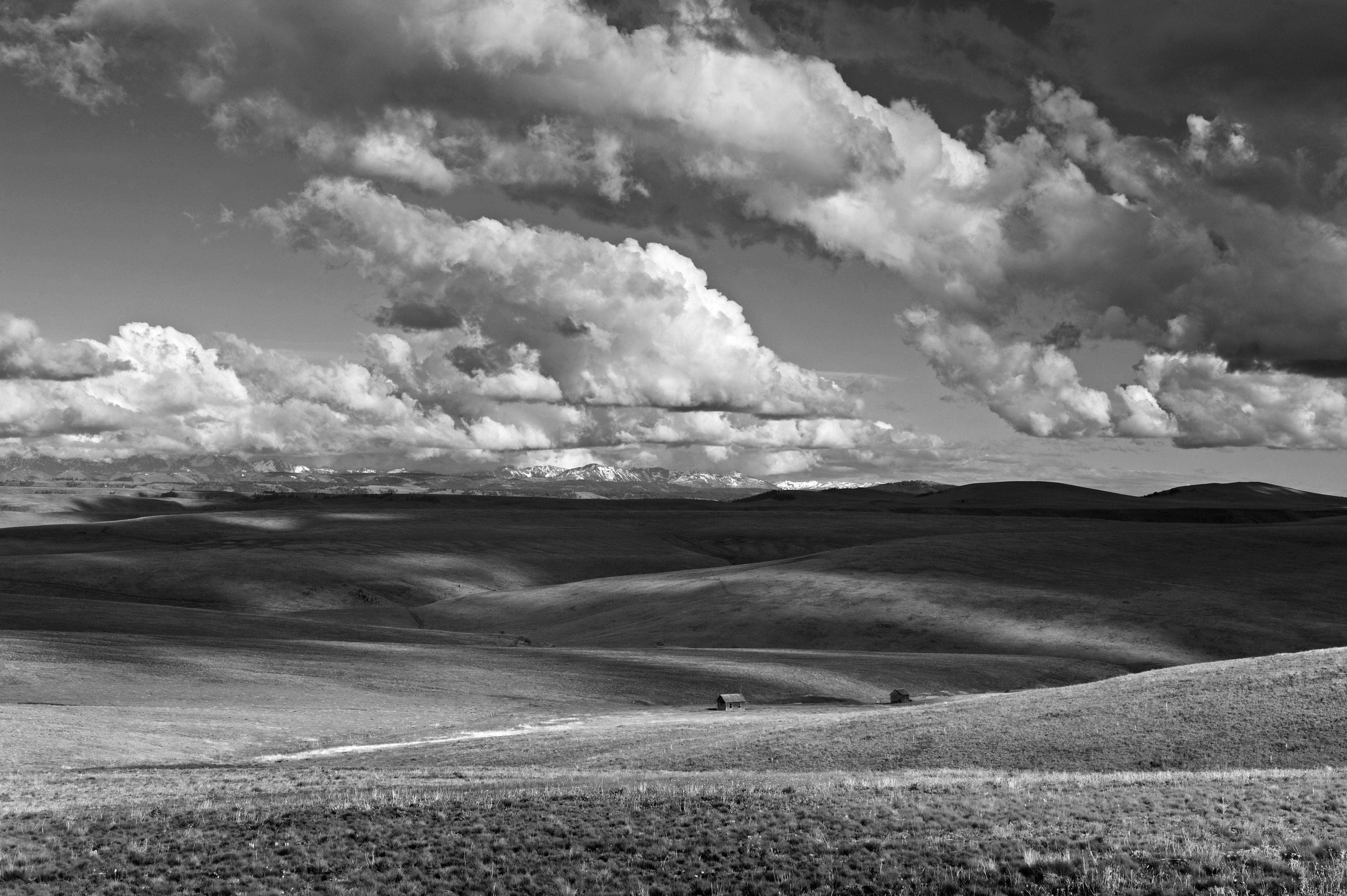
Stegner details the history of the Cypress Hills, a geographic landmark that straddles the Alberta-Saskatchewan border. The law came before the people, in stark contrast to his American birthplace, although the people, plains folk outrunning the law and forged by weather and reality into being hard, pragmatic, and callous, had a lot in common. At least until the law arrived:
It became clear very soon that the Canadian side was safer than the American, that the Mounted Police had more authority and were generally more to be trusted and easier to get on with than the blue-coated American cavalry, and much more to be trusted than Montana sheriffs or marshals or posses.
The effect of a dry, windy, cold land is obvious to Stegner:
The accident of being brought up on a belated, almost symbolic frontier has put me through processes of deculturation, isolation, and intellectual schizophrenia that until recently have been a most common American experience. The lateness of my frontier and the fact that it lay in Canada intensified the discrepancy between that part of me which reflects the folk culture and that part which reflects the education imported and often irrelevant. The dichotomy between American and European that exists to some extent in all of us exists most dramatically in people reared in frontiers, for frontiers provide not only the rawest forms of deculturation but the most slavish respect for borrowed elegances.
It is Stegner’s idea of the frontier that is most relevant to discussing regional identity in a Canadian context. The frontier is something people chase; it is a dream. Freedom, prosperity, romance (in all senses of the word). Two characters stand out in Wolf Willow: Rusty, an Englishman who finds himself near death working cattle, and Pop Martin, who is a typical small-town prairie booster who thinks they can find immeasurable wealth in the delivery of civilization. Both are looking for something in the frontier, and both are slapped hard by reality: the first by the reality of prairie weather, the second by failure for prosperity to arrive.
But it is starkly different from the American frontier, due to the aforementioned timeline of law before settlement. The idea of the frontier, and the kind of men the frontier creates, is also starkly different in Canada than it is in the United States. This is from the forward by his daughter, Page:
And it is clear that Stegner’s often repeated belief that civic cooperation and a striving for community, not rugged individualism, were what settled the West finds its earliest expression in his Eastend experience. So does his reaction to the barbarism and callousness endemic to frontier life that manifested itself in his devotion as an adult to “civility” and manners (precisely because they were so absent in Eastend’s social interchange), and his allergic reaction to all forms of cruelty, prejudice, and persecution.
The mythology of a frontier that is rugged, and more importantly, will always be, is refuted in the reality faced by townsfolk, farmers, and cowboys alike. Frontiers change: “Progress destroys what makes a frontier satisfying,” but “Progress? It is impossible not to believe in progress in a frontier town. Every possibility is open, every opportunity still untested.” It’s the catch-22 of the prairies.
Alberta is a frontier. Well, Alberta was a frontier. Part of that identity remains, and it is ingrained in so many of us, but so too is the progress of our economy, and in turn, our identity. Just like the characters in Wolf Willow, in a town not dissimilar to many in Alberta, we’ve gone from the fur trade to open-range ranching to farming, oil and gas, and now tech, finance, and advanced manufacturing. In many ways, our economy now resembles Ontario’s more than it does the Alberta economy of the ‘90s.
Knowing the history Stegner relates about the Cypress Hills country is knowing a lot about the history of Alberta, too. And in doing so, it is understanding that our identity is different, but not wholly, from the nation; that our identity is starkly different from the Americans’, and that this has always been so. Stegner returned to Eastend to research the book and, in doing so, discovered a history he didn’t know while living there. He writes, simply, “I wish I had known some of this.” It’s a lament we should all have, because no one knows enough about their own history. Alberta, just like the rest of Canada, is the product of British law and order, not American anarchy. If anything unites us, from coast to coast, it is that.
Alberta Review relies on subscriptions to operate (we hate ads, and they’re kind of pointless). Please consider subscribing to support the publication.
Alberta Review is in no way associated with previous iterations of the publication Alberta Review.